The Short Answer
Tarot cards are a tool — paper and ink arranged into a symbolic system used for centuries for self-reflection, personal insight, and guided contemplation. They carry no inherent moral quality. They cannot summon anything, curse anyone, or bring bad luck. The question “are tarot cards evil?” says more about cultural conditioning than about the cards themselves.
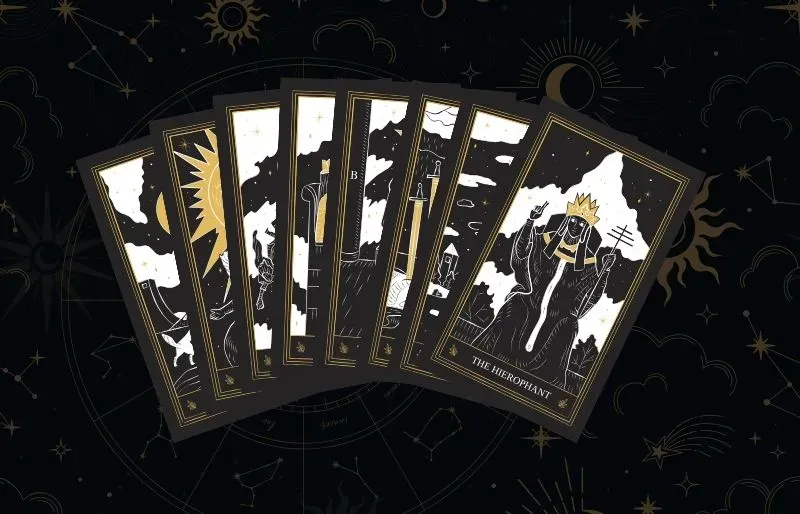
A tarot deck is made of 78 cards divided into the Major Arcana (22 cards representing life’s bigger themes and archetypes) and the Minor Arcana (56 cards reflecting everyday experiences and emotions). Each card carries symbolism drawn from centuries of human storytelling, psychology, and spiritual tradition. When you sit down with a deck, you are engaging with a language of images — nothing more, nothing less. What you bring to the cards determines what you receive from them.
Where Does the Fear Come From?
The fear surrounding tarot cards is deeply rooted in history, religion, and popular culture. Understanding where these fears originate is the first step toward seeing tarot for what it actually is — and what it is not.
Religious Opposition
Certain religious traditions view any form of divination as prohibited. Some Christian denominations cite specific scripture passages warning against seeking knowledge of the future outside of divine revelation. This perspective is understandable within its context — but most modern tarot practitioners don’t use cards for fortune-telling. They use them as mirrors for self-reflection, similar to journaling or therapy prompts. Many people of deep personal faith use tarot without any sense of spiritual conflict.
The distinction matters. Fortune-telling implies that the future is fixed and that someone possesses the power to reveal it. Self-reflective tarot practice, on the other hand, treats the cards as prompts for inner questioning. The reader isn’t channelling supernatural forces — they are facilitating a conversation between you and your own inner knowing. For many people, this practice actually deepens their spiritual life rather than conflicting with it.
Hollywood and Pop Culture
Film and television have done enormous damage to tarot’s reputation. The dramatic image of a mysterious figure revealing the Death card with ominous music — this has become the cultural default. In reality, the Death card represents transformation, endings that create space for new beginnings, and the natural cycle of change. It is one of the most misunderstood cards in the deck, and perhaps the most powerful when understood correctly.
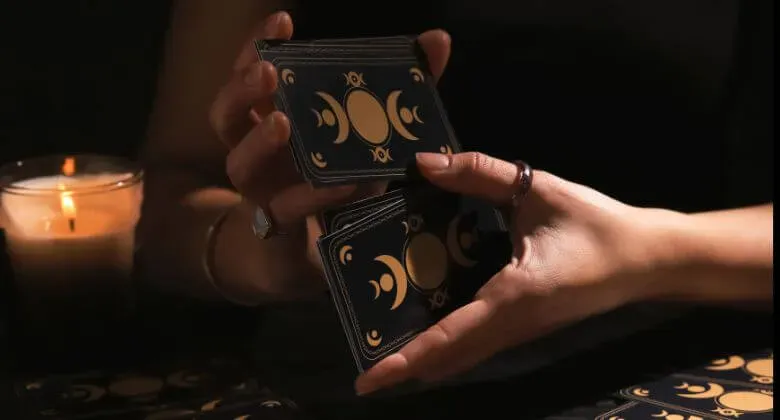
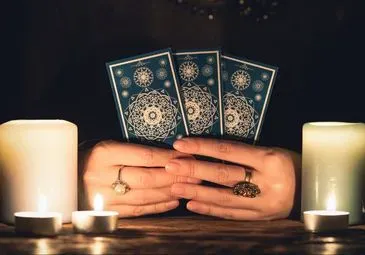
Horror films consistently portray tarot readers as either fraudsters or conduits for dark forces. This creates an association in the public imagination that has almost nothing to do with reality. A real tarot reading looks nothing like what Hollywood depicts. There are no flickering candles in a dark room, no dramatic gasps, no terrifying predictions. Instead, there is conversation, reflection, and a genuine desire to help someone see their situation more clearly.
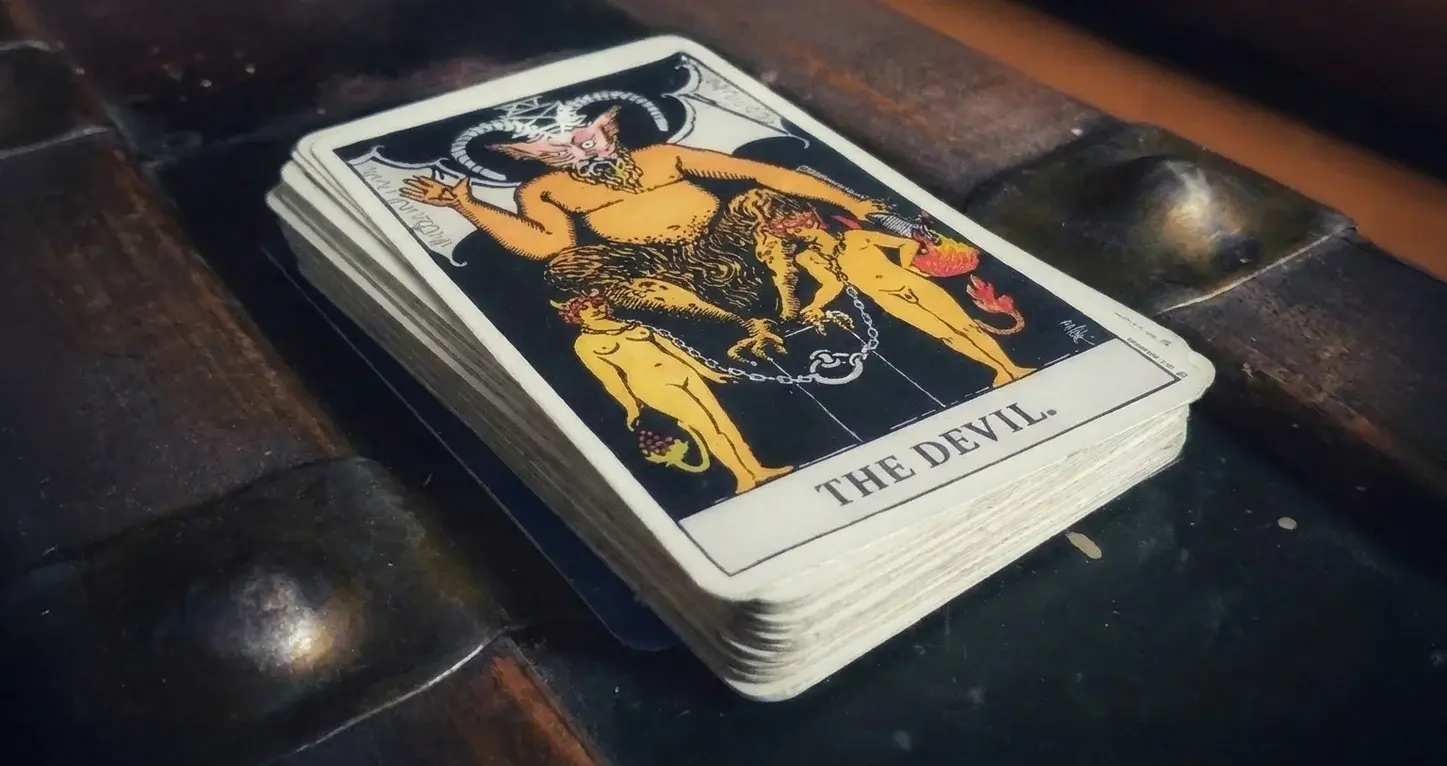
The media also tends to focus on the most visually dramatic cards — Death, The Tower, The Devil — while ignoring the other 75 cards in the deck that speak to love, hope, creativity, community, and growth. This selective representation has shaped public perception in a way that is deeply unfair to the practice and to the people who use it responsibly.
The True Origins of Tarot
Tarot cards originated in 15th-century Italy as a card game called “tarocchi.” They had no occult or spiritual significance at all — they were entertainment for the aristocracy. Wealthy families commissioned beautifully painted decks as status symbols, and the game was played in courts and salons across northern Italy. The imagery drew from Christian symbolism, classical mythology, and the social hierarchy of the time — not from any hidden mystical tradition.
It was not until the 18th century that French occultists began associating the cards with mystical traditions. Antoine Court de Gébelin published a theory linking tarot to ancient Egyptian wisdom, though this claim had no historical basis. Later, Éliphas Lévi connected the 22 Major Arcana cards to the 22 letters of the Hebrew alphabet and the Kabbalistic Tree of Life. These associations, while intellectually fascinating, were inventions of their era rather than discoveries of hidden truth.
In the early 20th century, the Rider-Waite-Smith deck (1909) became the most widely used tarot deck in the English-speaking world. Illustrated by Pamela Colman Smith under the direction of Arthur Edward Waite, it was the first deck to include detailed symbolic imagery on every card, making it accessible to a much wider audience. This deck established the visual language that most people associate with tarot today.
Carl Jung later recognised tarot’s archetypal imagery as reflecting universal patterns of human experience — the Hero’s Journey, the Shadow, the Wise One — legitimising their use as tools for psychological exploration and self-understanding. Jung saw the cards not as magical objects but as mirrors reflecting the collective unconscious — the shared symbolic language that runs through all human cultures and throughout all of history.
Tarot as a Tool for Self-Reflection
When used with intention and respect, tarot becomes a powerful framework for self-inquiry. The cards don’t tell you what will happen — they reflect what is already present in your inner landscape. Think of them as a conversation starter with yourself, a way to access thoughts and feelings that might otherwise remain beneath the surface of conscious awareness.
People turn to tarot for many reasons, including:
- Clarifying decisions when you feel stuck or overwhelmed by options
- Recognising patterns you keep repeating in relationships, work, or personal habits
- Processing complex emotions safely, with symbolic distance that makes difficult feelings easier to examine
- Building trust in your own intuition and inner wisdom
- Gaining perspective on relationships and life transitions that feel confusing or uncertain
The beauty of tarot lies in its open-ended nature. A single card can mean different things to different people, depending on their circumstances, their emotional state, and the question they brought to the reading. This is not a flaw in the system — it is the entire point. The cards create space for you to project your own understanding onto a structured symbolic framework, and in doing so, you often discover clarity you did not know you had.
Many therapists, counsellors, and coaches have begun incorporating tarot into their practices, not as a mystical tool but as a creative and effective way to open up conversations that might otherwise feel too direct or confrontational. When a client pulls The Tower, for example, a therapist might ask: “What structures in your life feel like they are crumbling? What might emerge from the rubble?” The card becomes a safe entry point into a deeply personal topic.
What Happens in a Professional Reading
A professional tarot reading is nothing like what you see in movies. There are no dark rooms, crystal balls, or ominous predictions. At Ayutyas, a reading begins with conversation — understanding what you are navigating in your life. What questions are weighing on you? What decisions feel unclear? What emotions are you struggling to process?
The cards are shuffled with focused intention, placed in a meaningful spread, and interpreted collaboratively. You remain in control throughout. Nothing is imposed on you. The reader offers perspective; you decide what resonates. A good reader never tells you what to do — instead, they help you see your situation from angles you may not have considered on your own.
During a reading, you might experience moments of recognition — that feeling of “yes, that is exactly what I have been feeling.” You might also encounter cards that challenge you, that point to blind spots or uncomfortable truths. This is not something to fear. It is precisely where the value lies. Growth rarely comes from hearing only what we want to hear.
A typical reading at Ayutyas lasts between 60 and 90 minutes, giving ample time for deep exploration. Tyas creates an environment of warmth and trust, where you can be fully honest about what you are experiencing without fear of judgment. Whether the session happens in person in Bali or online from anywhere in the world, the quality of connection and insight remains the same.
How Ayutyas Approaches Tarot
At Ayutyas Holistic Healing Home in Sukawati, Bali, tarot is one part of a larger holistic practice that includes sound healing, yoga, and energy work. Tyas brings her Javanese spiritual heritage and years of study to each reading, creating a safe space where you can explore your questions without judgment. Whether you are dealing with a career decision, a relationship crossroads, or simply seeking clarity on your path — the cards become a conversation partner, not a fortune teller.
The Javanese tradition carries a deep respect for the unseen dimensions of life — not in a superstitious way, but through an understanding that intuition, ancestral wisdom, and spiritual awareness are natural parts of human experience. Tyas weaves this understanding into every reading, honouring both the practical realities of your life and the deeper currents that flow beneath them.
What makes the approach at Ayutyas different is the integration of multiple healing modalities. A tarot reading might be combined with sound healing to help release emotional blockages that surface during the session. It might be followed by breathwork to help you integrate the insights you have received. This holistic approach recognises that true clarity comes not just from understanding your situation intellectually, but from feeling it in your body and spirit as well.
Tarot at Ayutyas is never about prediction or fear. It is about empowerment. It is about helping you reconnect with the wisdom that already lives within you, and giving you the tools and confidence to move forward with clarity and purpose.
“The practice of awareness and mindfulness is not about achieving perfection; it’s about connecting to your true potential and living in accordance with your soul’s calling.” — Tyas