Why Does Shuffling Matter?
Shuffling tarot cards is more than mixing paper. It is a ritual — a bridge between everyday awareness and focused receptivity. When you shuffle, you connect your energy and intention with the deck, preparing the symbolic language of tarot to speak to your specific question. The physical act of handling the cards creates a transition point between ordinary thinking and the quieter, more receptive state that allows meaningful readings to emerge.
For beginners especially, shuffling can feel awkward. Tarot cards are larger than standard playing cards, and many worry about doing it “wrong.” Here is the truth: there is no wrong way to shuffle tarot cards. What matters is presence and intention, not technique. The cards do not require a perfect riffle or a precise number of repetitions. They require your attention, your openness, and your willingness to engage with the process as something more than a mechanical task.
Popular Shuffling Methods
The Overhand Shuffle
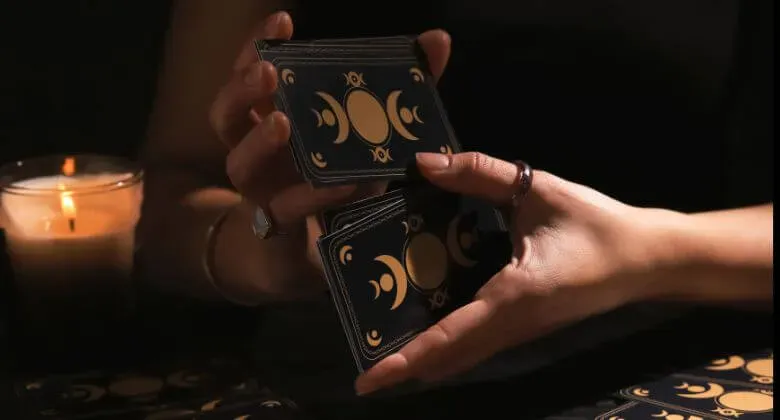
The most common and accessible method. Hold the deck vertically in your non-dominant hand. With your dominant hand, lift sections of five to ten cards from the back and place them at the front. Repeat, varying section sizes, until the deck feels thoroughly mixed — typically thirty seconds to one minute. This method is gentle on the cards and feels natural to most people, making it the go-to technique for both beginners and experienced readers. The overhand shuffle also allows you to maintain a meditative rhythm, creating a repetitive motion that helps quiet the mind and settle into your reading.
The Riffle Shuffle
Split the deck in half and interleave the two halves together. This mixes cards efficiently but requires practice with tarot-sized cards. If you riffle shuffle, do it gently — bend the cards as little as possible and let the corners interleave naturally. Some readers avoid this method because it can wear down the edges of the cards over time, while others prefer it precisely because of its efficiency. If you choose to riffle shuffle your tarot deck, consider doing so over a soft surface like a cloth or towel to reduce impact on the cards.
The Pile Shuffle
Deal cards face-down into five to seven piles, then gather them back in a different order. This method is slow and deliberate — ideal for meditative preparation. Many practitioners use it when they want to spend more time connecting with their deck. The pile shuffle is also useful when you feel that your deck has become “stuck” in a particular order, as it provides a thorough redistribution of cards that a quick overhand shuffle might not achieve. Some readers use the pile method as a first step, followed by an overhand shuffle to complete the mixing process.
Cutting the Deck
Splitting the deck into two or three sections and reassembling in a different order. Often used as a final step after shuffling — a way to seal your intention before drawing cards. Cutting the deck is one of the simplest actions you can take, yet it carries a sense of finality and commitment. Many readers develop a personal ritual around cutting: some always cut into three, others let their hands find a natural stopping point. In some traditions, the querent — the person receiving the reading — is invited to cut the deck as a way of placing their own energy into the process.
Setting Intention Before You Shuffle
The most important element of shuffling is not the physical technique — it is the intention behind it. Before you begin, take a moment to centre yourself. Close your eyes. Take a few deep breaths. Hold your question in mind without forcing it. Allow the question to settle naturally rather than gripping it with your thoughts. This is the moment where the real work of a tarot reading begins — not when the cards are drawn, but when you choose to become present.
This intentional pause transforms shuffling from a mechanical task into a practice of focus and presence — creating a bridge between your conscious question and the deeper knowing that tarot can access. Without this step, shuffling is just moving cardboard around. With it, shuffling becomes the opening gesture of a conversation with your own intuition. The difference between a flat, uninsightful reading and one that resonates deeply often comes down to this single moment of intentional preparation.
Some practitioners also cleanse their deck before shuffling: tapping the deck firmly on a table to reset the energy, placing a crystal on top overnight, passing cards through incense smoke, or simply holding the deck with both hands and setting a clear mental intention. These rituals are not required, but they can help you transition from the bustle of daily life into the focused, receptive state that supports a meaningful reading. Find what works for you and make it part of your personal practice.
How Long Should You Shuffle?
There is no fixed rule. Some readers shuffle for thirty seconds, others for several minutes. The common guidance is to shuffle until it feels right — until you notice a shift in your focus, a sense of readiness, or an intuitive signal that the cards are prepared. This might sound vague, but with practice you will develop a genuine feel for when the deck is ready. It is similar to how a musician knows when they have tuned their instrument — there is a quality of resonance that becomes unmistakable over time.
Pay attention to subtle cues: a distinct sense of completion, a card jumping from the deck, your mind settling into quietness, or even a slight change in the way the cards feel in your hands. If you are new to tarot, start practical: shuffle five to seven times, then cut once. As your practice deepens, you will develop your own sense of when the deck is ready. Trust that sense. It is your intuition at work — and learning to trust it during shuffling is excellent preparation for trusting it during the reading itself.
Common Mistakes to Avoid
- Shuffling without intention — going through the motions while your mind is elsewhere. If you catch yourself thinking about your grocery list or checking the time, pause, take a breath, and refocus before continuing.
- Being too rough with the cards — tarot decks develop personal significance over time, and handling them with care reflects the respect you bring to your practice. Rough shuffling can also damage card edges and artwork.
- Overthinking the method — the purpose is connection, not perfection. No tarot reading has ever failed because of an imperfect shuffle. Release the need to do it “right” and focus instead on being present.
- Skipping the shuffle entirely — the ritual of shuffling is part of what creates sacred space for a reading. Even if you are in a hurry, take at least a few moments to handle the cards with intention before drawing.
- Ignoring reversed cards — if you read with reversals, make sure your shuffling method allows cards to turn naturally. The overhand shuffle and pile shuffle both allow for this, while a simple cut does not.
Learn Tarot at Ayutyas in Bali
If you want to deepen your tarot practice beyond what a blog post can teach, Ayutyas Holistic Healing Home in Sukawati offers hands-on tarot workshops with Tyas. You will learn not just shuffling but the full ritual: setting sacred space, connecting with your deck, choosing spreads, and interpreting cards with genuine depth. These workshops are designed for all levels — whether you have never held a tarot deck before or you have been reading for years and want to refine your approach. Working with a teacher in person allows you to receive immediate feedback, ask questions as they arise, and experience the energetic dimension of tarot that is impossible to convey through text alone.
“The cards are a mirror. How you shuffle them, how you hold them, how you approach them — all of it reflects the quality of attention you bring to the reading itself.” — Tyas