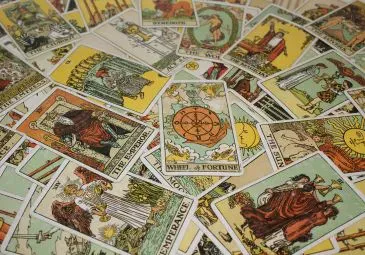
The 78-Card Deck: A Complete Symbolic System
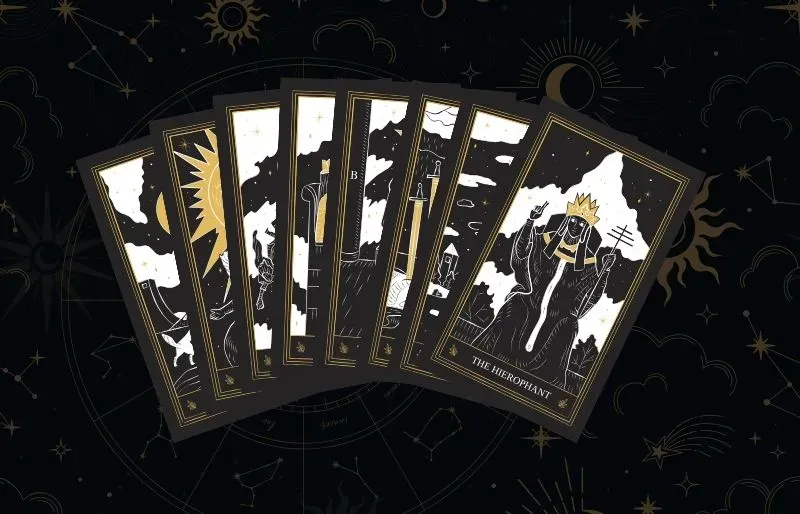
A standard tarot deck contains exactly 78 cards, divided into two distinct sections: 22 Major Arcana and 56 Minor Arcana. This isn’t a random number. The structure of the deck is a deliberately designed symbolic architecture — a language of images, numbers, and archetypes that has been refined over centuries to capture the full range of human experience.
Understanding this structure doesn’t require memorising all 78 cards. It requires understanding the logic behind them — and once you see it, the deck becomes an extraordinarily coherent map of consciousness.
The 22 Major Arcana
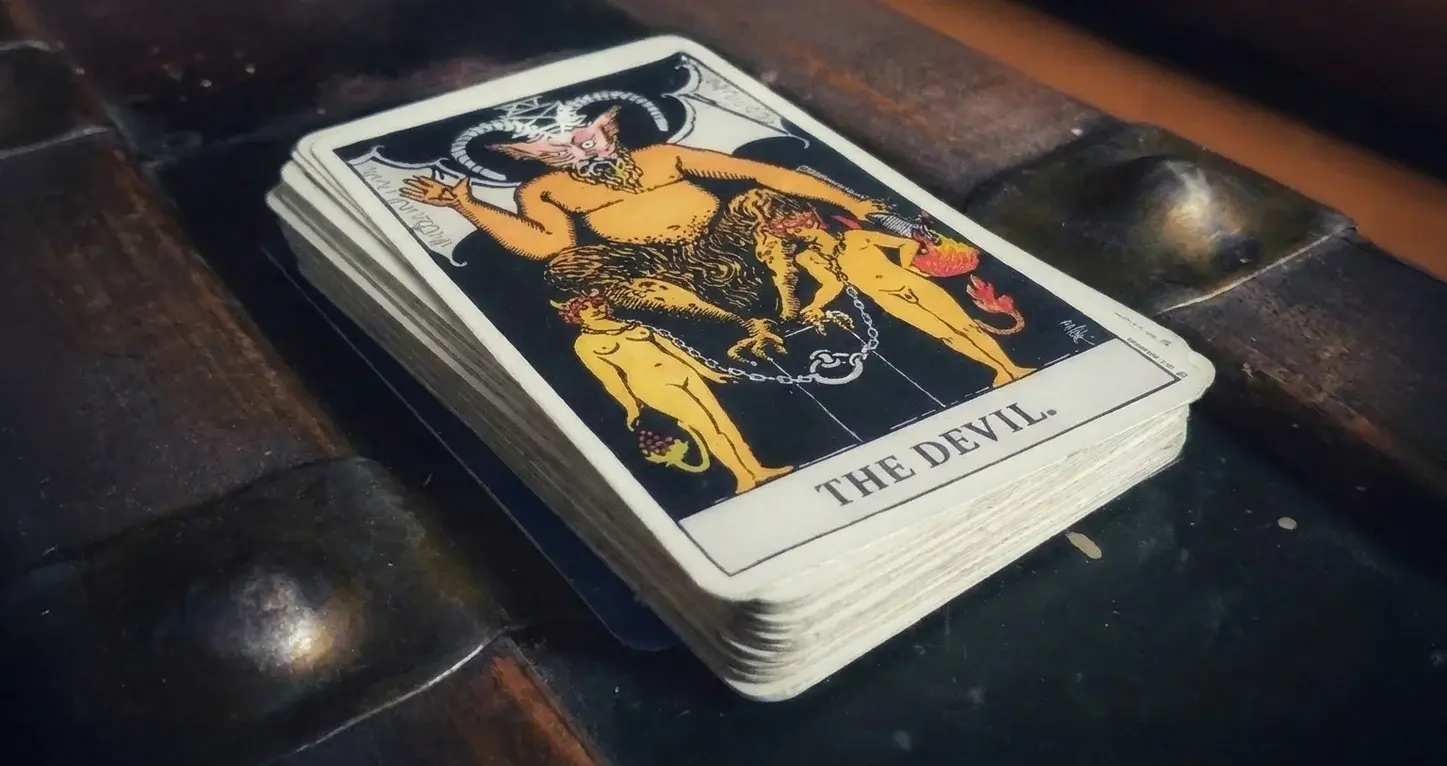
The Major Arcana — literally “greater secrets” — consists of 22 numbered cards (0 through 21), each depicting a fundamental human archetype or universal life theme. These are the cards most people recognise: The Fool, The Magician, The High Priestess, The Empress, The Tower, Death, The World.
Each Major Arcana card represents something bigger than a daily event. They speak to the soul’s journey — transformation, awakening, surrender, mastery, and the cycles of death and rebirth that mark every significant life transition.
The Fool’s Journey
One of the most powerful frameworks for understanding the Major Arcana is The Fool’s Journey. Card 0 — The Fool — represents a soul setting out with infinite potential and no experience. As The Fool moves through the remaining 21 cards, they encounter every archetype: the nurturing Empress, the structured Emperor, the disruptive Tower, the transformative Death card, and finally The World — completion, integration, and the beginning of a new cycle.
This narrative mirrors the stages of personal development found in myths, spiritual traditions, and psychology across cultures. It is why tarot feels universally relevant — because it maps the journey we all walk.
The 56 Minor Arcana
While the Major Arcana deals with life’s grand themes, the Minor Arcana addresses the everyday texture of living. These 56 cards are divided into four suits of 14 cards each: Ace through Ten, plus four Court Cards (Page, Knight, Queen, King).
The Four Suits and Their Elements
Each suit corresponds to an element and a domain of human experience:
- Cups (Water) — Emotions, relationships, love, intuition, and the inner world of feeling
- Pentacles (Earth) — Material reality, finances, career, health, and the physical body
- Wands (Fire) — Passion, creativity, ambition, spiritual drive, and forward momentum
- Swords (Air) — Thought, communication, conflict, truth, and mental clarity
This elemental framework means that when you see a spread dominated by Cups, the reading centres on emotional themes. A spread full of Swords points to mental activity, decisions, or conflict. The suits give immediate context before you even interpret individual cards.
The Court Cards
The 16 Court Cards (four per suit) represent either people in your life or qualities you are developing within yourself:
- Page — Curiosity, new learning, the student energy
- Knight — Action, pursuit, movement toward a goal
- Queen — Inner mastery, nurturing, receptive wisdom
- King — Outward authority, leadership, mature command
Why Exactly 78 Cards?
The number 78 is not arbitrary. It is the sum of the numbers 1 through 12 — a number connected to the 12 astrological houses, the 12 months, and the 12 stages of many spiritual traditions. The 22 Major Arcana cards correspond to the 22 letters of the Hebrew alphabet, linking tarot to the Kabbalistic Tree of Life. The 56 Minor Arcana mirror the structure of standard playing cards (which evolved from tarot, not the other way around).
Whether or not you engage with these esoteric connections, the practical result is a deck that covers human experience with remarkable completeness. There are no gaps — every emotional state, every life situation, every type of relationship dynamic has a card that speaks to it.
How Structure Creates Meaning
The beauty of the 78-card system is that the structure itself teaches. The relationship between Major and Minor Arcana mirrors the relationship between your life’s deeper purpose and its daily unfolding. The four suits correspond to the four elements, the four seasons, the four directions — a framework for understanding wholeness.
When you understand why the deck is structured the way it is, individual card meanings become easier to learn. You are not memorising random symbols — you are learning a language with consistent grammar.
Tarot at Ayutyas in Bali
At Ayutyas Holistic Healing Home in Sukawati, Tyas draws on the full symbolic depth of the 78-card system in every reading. She weaves together numerology, elemental wisdom, and archetypal psychology — combined with her Javanese spiritual heritage — to help you see your situation with genuine clarity. Whether you are new to tarot or deeply familiar with the cards, the depth of the full deck always has something new to reveal.
“Every card in the deck has something to teach. The 78 cards together hold the entire story of what it means to be human — your struggles, your growth, your moments of grace.” — Tyas