What Is Tibetan Singing Bowl Sound Healing?
Tibetan singing bowl sound healing is a therapeutic practice that uses hand-hammered metal bowls to produce rich, layered tones that interact with the body on multiple levels. Unlike a single-note instrument, each singing bowl generates a complex spectrum of frequencies simultaneously — a fundamental tone accompanied by multiple overtones and harmonics that weave together into a sonic tapestry unique to each individual bowl.
When a practitioner strikes or rims a singing bowl, it creates two distinct types of vibration. The first is airborne sound — the audible frequencies that travel through the air and enter through your ears, engaging your auditory system and influencing your brainwave patterns. The second is tactile vibration — physical oscillations that travel through the bowl itself and, when placed on or near the body, transmit directly into your tissues, muscles, and bones. This dual pathway of airborne and tactile stimulation is what makes singing bowl therapy fundamentally different from simply listening to recorded music or ambient sound.
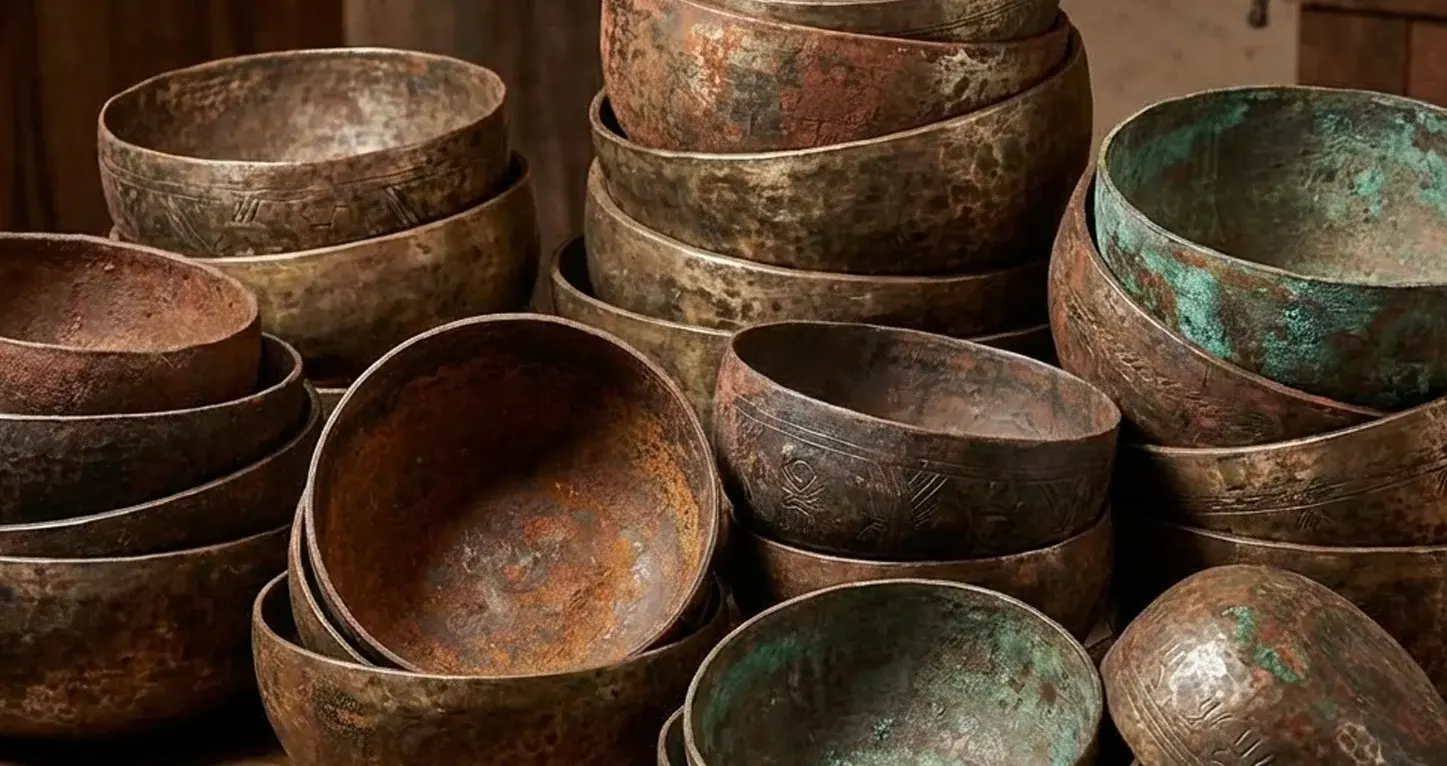
The bowls themselves are traditionally crafted from an alloy of multiple metals, often including copper, tin, zinc, iron, silver, gold, and nickel. Each metal contributes its own resonant properties to the final sound. The hand-hammering process — which can involve thousands of individual strikes over several days — creates subtle variations in the bowl’s thickness and density that give each piece its distinctive voice. No two hand-hammered bowls sound exactly alike, and experienced practitioners select specific bowls for their particular tonal qualities and therapeutic applications.
Ancient Origins
The use of singing bowls for spiritual and healing purposes stretches back thousands of years into the high plateaus and secluded valleys of the Himalayan region. While the precise origins remain a subject of scholarly debate, the oldest known singing bowls have been traced to the pre-Buddhist Bon tradition of Tibet, which predates the arrival of Buddhism in the region by several centuries. These early practitioners understood something that modern science is only beginning to confirm — that sound vibration has a direct and measurable effect on human physiology and consciousness.
Within Tibetan Buddhist monasteries, singing bowls became integral to daily spiritual practice. At Drepung Monastery, one of the great three Gelug university monasteries of Tibet, monks used singing bowls to mark transitions between meditation sessions, to accompany chanting, and to create states of deep contemplative absorption. The bowls were not merely timepieces or musical instruments — they were understood as tools for transforming consciousness, clearing energetic obstructions, and creating an atmosphere conducive to dharma teachings and practice.
As Buddhism spread along the ancient trade routes connecting Tibet to Nepal, India, Bhutan, and beyond, the knowledge of singing bowls travelled with it. Different regions developed their own distinctive styles of bowl-making and their own approaches to therapeutic application. Nepalese artisans became particularly renowned for the quality of their craftsmanship, and to this day, the Kathmandu Valley remains one of the primary sources for traditionally made singing bowls. The knowledge passed from master to apprentice over generations, preserved through direct oral transmission rather than written texts.
The Science Behind the Sound
Modern research has begun to provide a scientific framework for understanding what ancient practitioners observed through direct experience. Studies conducted at institutions around the world have documented measurable physiological changes in individuals exposed to singing bowl therapy, confirming that the effects extend well beyond subjective relaxation.
One of the most consistently documented effects is the reduction of heart rate and blood pressure during and after singing bowl sessions. When the body is exposed to the steady, rhythmic vibrations of a singing bowl, the autonomic nervous system begins to shift from sympathetic dominance (the stress response) toward parasympathetic activation (the rest-and-repair response). This shift is not merely psychological — it involves measurable changes in cardiovascular function, respiratory rate, and hormonal balance.
Electroencephalography (EEG) studies have shown that singing bowl frequencies can guide brainwave activity from the faster Beta patterns associated with active thinking and stress toward the slower Alpha and Theta patterns associated with deep relaxation, meditation, and creative insight. This phenomenon, known as brainwave entrainment or the frequency-following response, occurs when the brain synchronises its electrical activity to match the dominant frequency in the external auditory environment. The result is a measurable shift in consciousness that many people describe as deeply restful yet profoundly alert.
Perhaps most significantly, research has identified singing bowl vibrations as a potent stimulator of the vagus nerve — the longest cranial nerve in the body, running from the brainstem through the neck, chest, and abdomen. The vagus nerve is the primary communication highway of the parasympathetic nervous system, and its stimulation has been linked to reduced inflammation, improved digestion, enhanced immune function, and better emotional regulation. The deep, resonant vibrations of a singing bowl placed on or near the torso create a natural form of vagal stimulation that mirrors techniques now being explored in clinical medicine.
Types of Singing Bowls
Not all singing bowls are created equal, and different styles produce distinctly different acoustic properties suited to different therapeutic purposes. Understanding these differences helps practitioners select the right instruments for each session and each individual.
The Thadobati bowl is one of the most common and versatile types. Characterised by its high, straight walls and flat bottom, the Thadobati produces a bright, clear tone with strong high-frequency overtones. These bowls are particularly effective for mental clarity and upper-body work, and their penetrating sound makes them excellent tools for breaking through mental fog and scattered thinking.
The Jambati is the largest of the traditional bowl types, with a wide, curved profile and a deep, resonant fundamental tone. Jambati bowls produce powerful low-frequency vibrations that can be felt throughout the entire body. They are often used for grounding work, deep relaxation, and addressing tension held in the lower body and abdomen. Their rich bass tones create a sense of stability and rootedness that many people find profoundly calming.
The Naga bowl, sometimes called a pedestal bowl, sits on a raised base and produces a distinctively clear, bell-like tone with a long sustain. Naga bowls are prized for their purity of sound and are frequently used in meditation practice and ceremonial contexts where clarity and focus are paramount.
The Mani bowl is characterised by its rounded, cup-like shape and produces warm, mid-range tones with gentle overtones. These bowls are often described as having a particularly soothing quality and are well-suited for emotional healing work and heart-centred practices.
The Ultabati bowl features an unusually deep, curved profile that generates extremely low fundamental frequencies with powerful physical vibration. Ultabati bowls are among the rarest and most sought-after types, and their deep, penetrating tones are especially effective for releasing deeply held physical tension and promoting whole-body relaxation.
What to Expect in a Session
A typical singing bowl healing session lasts between 60 and 90 minutes, though the therapeutic portion of the experience is supported by careful preparation and gentle integration time on either side. Understanding what to expect can help you relax more fully and receive the maximum benefit from the experience.
Every session begins with a consultation. Your practitioner will ask about your physical health, emotional state, and any specific intentions or areas of concern you would like to address. This conversation is essential because it allows the practitioner to select appropriate bowls, determine optimal placement, and tailor the session to your individual needs. There is no one-size-fits-all approach to sound healing — the most effective sessions are those that respond to what each person brings on that particular day.
You will then be invited to lie down in a comfortable position, usually on a padded mat or massage table. Bolsters, blankets, and eye covers are typically offered to help you settle into a state of physical ease. The environment is carefully prepared — soft lighting, comfortable temperature, and minimal external noise all contribute to creating a container in which deep relaxation can occur naturally.
The practitioner will then place bowls at strategic positions on and around your body. The specific placement varies depending on your needs, but commonly includes positions along the spine, on the chest, abdomen, and around the head. When the bowls are struck or rimmed, you will feel the vibrations moving through your body in waves — some people describe this as a gentle internal massage, others as a warm, spreading sensation that dissolves tension from the inside out. The experience is profoundly individual, and there is no right or wrong way to receive it.
Sound Healing at Ayutyas
At Ayutyas Holistic Healing Home in Sukawati, Bali, Tyas brings together a carefully curated collection of both antique and modern singing bowls, each selected for its specific therapeutic qualities. The antique bowls, some of which are several decades old, carry a depth and complexity of tone that comes only from age and extensive use. The modern bowls are precision-crafted to complement and extend the tonal range available in each session.
Tyas practises the Ohmpuncture method, an approach that combines the principles of traditional singing bowl therapy with an understanding of the body’s energetic pathways and acupressure points. By placing specific bowls at precise locations on the body and applying carefully calibrated vibration, this method targets both physical tension and energetic blockages simultaneously. The result is a deeply integrated healing experience that addresses the body, mind, and energy system as a unified whole.
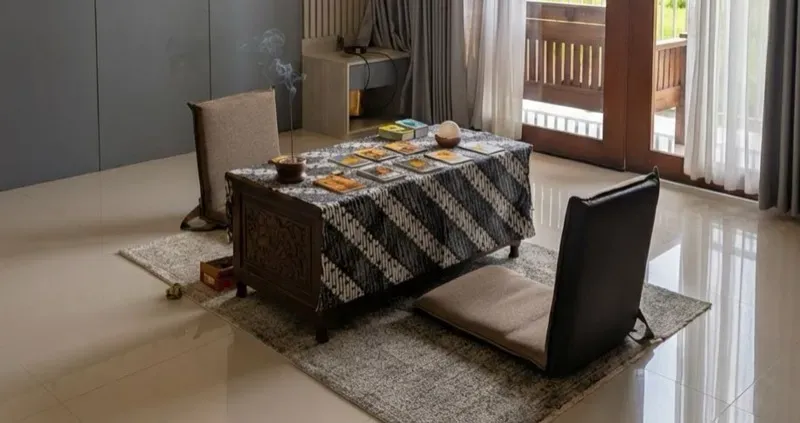
Located in the heart of Sukawati — a culturally rich area just minutes from the artistic centre of Ubud — the Ayutyas healing space is designed to be a sanctuary of calm amidst the vibrant energy of Bali. Whether you are a first-time visitor to sound healing or an experienced practitioner seeking deeper work, each session is tailored to meet you exactly where you are. The goal is never to impose a fixed protocol, but to listen carefully to what your body and mind are asking for and to respond with skill, sensitivity, and genuine care.
“Sound does not just enter through the ears. It enters through every cell. When we work with singing bowls, we are speaking directly to the body in a language it has always understood.” — Tyas