
What Is Sound Healing?
Sound healing employs vibrations from instruments, voice, and frequencies to enhance physical, emotional, and mental wellbeing. The practice rests on a fundamental principle: all matter vibrates. Each cell, organ, and tissue in your body maintains its own resonant frequency. When illness or stress disrupts these natural rhythms, sound healing aims to restore balance by using external vibrations to help the body return to its balanced state.
At Ayutyas Holistic Healing Home in Sukawati, Bali, Tyas approaches sound healing as a discipline grounded in both ancient tradition and contemporary science — not as a passing wellness trend but as a practice with deep roots and measurable effects.
The Core Principles of Sound Healing
Sound healing is constructed upon three interconnected principles: resonance, frequency, and entrainment. Understanding these concepts transforms sound healing from something that seems mystical into something grounded in observable physics.
How Does Resonance Affect the Body?
Resonance occurs when one vibrating object causes another to vibrate sympathetically. Every physical structure has a natural resonant frequency — the frequency at which it vibrates most easily and efficiently. Different organs and tissues respond to different frequencies. When a sound healing instrument produces a frequency matching or harmonising with a body part, that area responds by vibrating more strongly.
This explains why placing a singing bowl on the chest produces different sensations than placing it near the head. Different areas of the body resonate with different frequencies, and a skilled practitioner works with this natural responsiveness to direct therapeutic vibration where it is most needed.
What Role Does Frequency Play in Healing?
Frequency, measured in Hertz (Hz), determines a sound’s character and its therapeutic properties. Lower frequencies (below 250 Hz) produce deep, grounding sensations that tend to calm the nervous system and relax muscle tension. Higher frequencies create brighter, more stimulating effects that can energise and clarify mental focus.
In sound healing practice, specific frequencies are selected for their therapeutic properties. For example, 432 Hz is widely regarded as a natural healing frequency that promotes calm and coherence, while 528 Hz is associated with cellular repair and transformation. While the specific claims about individual frequencies continue to be researched, the general principle — that different frequencies produce different physiological responses — is well established.
What Is Entrainment in Sound Therapy?
Entrainment is perhaps the most important principle in sound healing. It describes the phenomenon where a stronger rhythmic vibration causes a weaker one to synchronise with it. The concept has been documented in physics since Christiaan Huygens observed pendulum clocks synchronising in the 17th century.
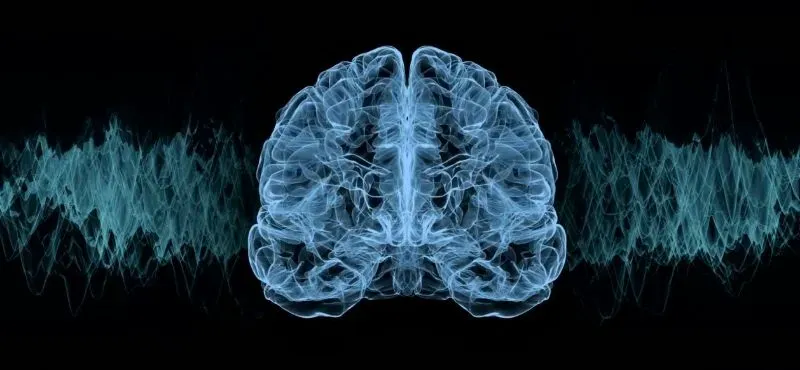
In the human body, entrainment affects brainwaves, heart rate, respiratory rhythm, and cellular oscillation. If your brainwaves are operating in a Beta state (anxious, overthinking), exposure to a slow, steady rhythm can gradually pull those brainwaves into slower, calmer patterns — Alpha (relaxed awareness) or Theta (deep meditation). This is not metaphor — it is measurable through EEG monitoring.
The Science Behind Vibrational Healing
Research published in peer-reviewed journals, including the Journal of Evidence-Based Integrative Medicine, demonstrates that Tibetan singing bowl sessions significantly reduce tension, anger, fatigue, and depressed mood. Research from the British Academy of Sound Therapy has documented reductions in heart rate, blood pressure, and respiratory rate during sessions.
The field of cymatics — the study of visible sound vibrations — provides compelling visual evidence of sound’s organising power. When a metal plate covered in sand is exposed to specific frequencies, the sand arranges itself into intricate, symmetrical patterns. These patterns change as the frequency changes, demonstrating that sound has a direct, physical organising effect on matter.
Neuroscience research using functional MRI shows that listening to sustained tonal frequencies activates the parasympathetic nervous system — the body’s rest-and-repair mode. This activation triggers a cascade of physiological benefits including reduced cortisol production, improved immune function, enhanced cellular repair, and deeper sleep patterns.
How Sound Healing Affects the Brain and Nervous System
The brain responds to sound with remarkable speed and sensitivity. Auditory processing is one of the brain’s fastest functions — we respond to sound faster than to visual stimuli. Sound can bypass the analytical mind entirely and affect the nervous system directly, which is why a single sustained tone can produce a physical sensation of calm before the thinking mind has had time to process what is happening.
In sound healing, this direct neural pathway is used therapeutically. Sustained, harmonically rich sounds gradually shift the brain’s dominant frequency from Beta (active thinking, 13–30 Hz) into Alpha (relaxed awareness, 8–13 Hz) and Theta (deep meditation, 4–8 Hz) states. These shifts are not subtle — they produce qualitatively different experiences of consciousness, from busy mental chatter to spacious stillness.
Can Sound Therapy Reduce Cortisol Levels?
Yes. Research has found that participants experienced significant reductions in tension and negative mood after a single singing bowl session. The mechanism is straightforward: sound entrainment activates the parasympathetic nervous system, which in turn reduces cortisol production. Many guests at Ayutyas report noticeable stress reduction after a single session, with cumulative benefits from repeated visits.
Ancient Traditions of Sound as Medicine
Sound healing is not a modern invention. Cultures across the ancient world recognised sound as a powerful healing force. Aboriginal Australians used the didgeridoo for healing ceremonies spanning over 40,000 years. Ancient Egyptians employed vowel sound chanting in healing temples. Greek physicians, including Pythagoras, prescribed specific musical intervals for physical and psychological ailments. Indian traditions developed Nada Yoga — the yoga of sound — viewing vibration as the fundamental substance of creation.
Tibetan Buddhist traditions, which inform much of Tyas’s practice at Ayutyas, employ singing bowls, bells, gongs, and chanting as tools for meditation and healing. These instruments were not chosen randomly — they were developed over centuries of contemplative practice, refined through direct experience of their effects on consciousness and the body.
What modern science adds to these ancient traditions is measurement and mechanism. We can now document the brainwave changes, cortisol reductions, and nervous system shifts that practitioners have observed experientially for millennia. The science confirms what the traditions have long known: sound is one of the most direct and powerful ways to shift the state of the human body and mind.
Sound Healing Instruments and Their Uses
Different instruments produce different therapeutic effects, and a skilled practitioner selects instruments based on each client’s specific needs:
- Tibetan singing bowls — Hand-hammered metal bowls producing rich, layered overtones. Ideal for deep relaxation, pain relief, and brainwave entrainment. The most versatile and widely used sound healing instrument.
- Crystal singing bowls — Made from pure quartz, producing clear, sustained tones with powerful resonance. Often associated with specific chakra frequencies and particularly effective for emotional release.
- Tuning forks — Precision instruments producing exact frequencies. Used for targeted work on specific body areas or energy fields. Particularly effective for pain points and joints.
- Gongs — Large instruments producing a complex wash of frequencies and overtones. Gong sessions are immersive experiences that can produce profound shifts in consciousness.
- The human voice — Toning, chanting, and overtone singing are among the most ancient and accessible forms of sound healing. The voice carries emotional intention alongside frequency.
At Ayutyas, each session is tailored individually. Tyas selects instruments based on what she observes in the client — their energy level, emotional state, physical tension patterns, and therapeutic goals. No two sessions are identical.
What to Expect in a Sound Healing Session at Ayutyas
Sessions begin with a brief conversation about your current state and what you hope to receive from the experience. You then lie comfortably in Ayutyas’s peaceful healing space in Sukawati, close your eyes, and allow the sound to work.
Tyas builds each session in layers, beginning with grounding tones and gradually introducing more complex frequencies and overtones. Most people enter deeply relaxed states within the first few minutes. Some experience physical sensations — tingling, warmth, or feelings of expansion. Others see colours or experience emotional releases. Many simply drift into a profound state between waking and sleep where deep healing can occur.
Sessions typically last 60 to 90 minutes. Afterward, guests often describe feeling lighter, clearer, and more centred than they have in months. The effects frequently continue unfolding over the following days as the body integrates the shifts that occurred during the session.
“When we approach sound healing with both scientific understanding and respect for ancient wisdom, we access something remarkably powerful — a therapy that works on every level of the human experience simultaneously.” — Tyas