What Is Hatha Yoga? Beyond the Modern Definition
Walk into most yoga studios today and ask about Hatha Yoga, and you will hear something like: “It’s a gentle, slower-paced class focused on basic postures.” This is not wrong, exactly, but it reduces one of the world’s most profound spiritual disciplines to a fitness category. Hatha Yoga is not a style of exercise. It is a comprehensive system of physical, energetic, and contemplative practices that has shaped human understanding of the body and consciousness for over a thousand years.
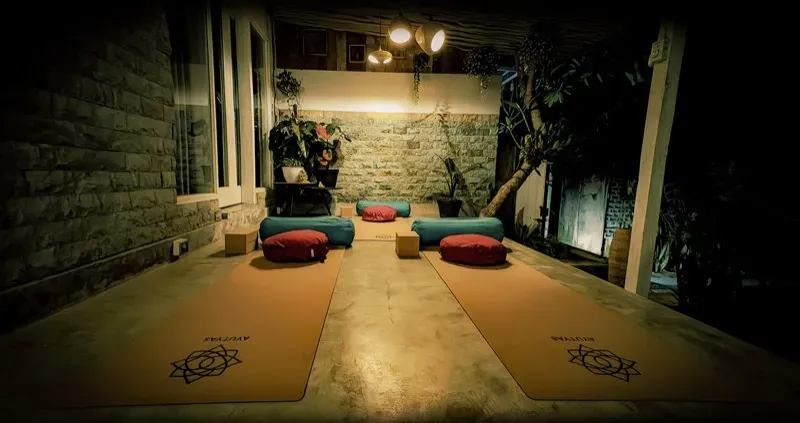
At Ayutyas Holistic Healing Home in Sukawati, Bali, Tyas teaches Hatha Yoga with an awareness of this depth. Her private sessions do not simply guide you through postures. They connect you to a living tradition — one that views the body not as something to be shaped for appearance but as an instrument of awareness, a vehicle for exploring the relationship between breath, energy, and consciousness.
The Historical Roots of Hatha Yoga
Hatha Yoga emerged from the broader tradition of Indian tantra, developing between the 9th and 15th centuries CE as a systematic approach to preparing the body and mind for higher states of awareness. The word “Hatha” is often translated as “force” or “effort,” reflecting the discipline’s emphasis on deliberate practice. A more symbolic interpretation breaks the word into “ha” (sun) and “tha” (moon), representing the union of opposing energies — active and receptive, warming and cooling, masculine and feminine — that Hatha Yoga seeks to balance.
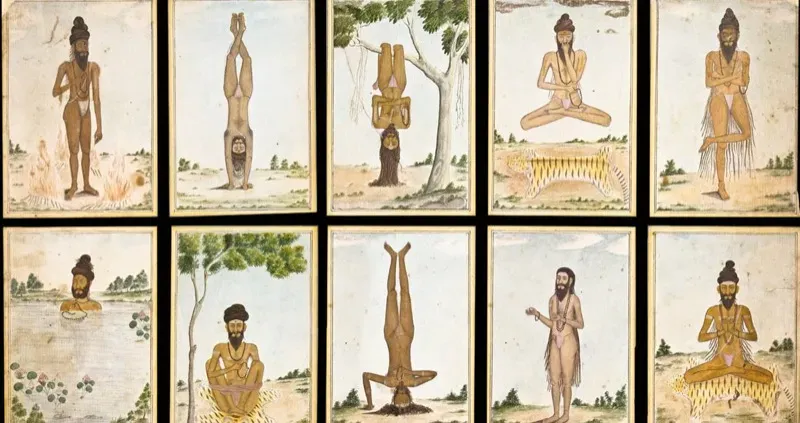
The roots of Hatha Yoga reach back to the Nath tradition — a lineage of yogis, ascetics, and spiritual practitioners who developed sophisticated techniques for working with the body’s subtle energies. The Nath yogis, particularly the legendary Gorakhnath, are credited with systematising many of the practices that define Hatha Yoga: asanas (postures), pranayama (breath control), bandhas (energy locks), mudras (energetic seals), and shatkarmas (purification techniques).
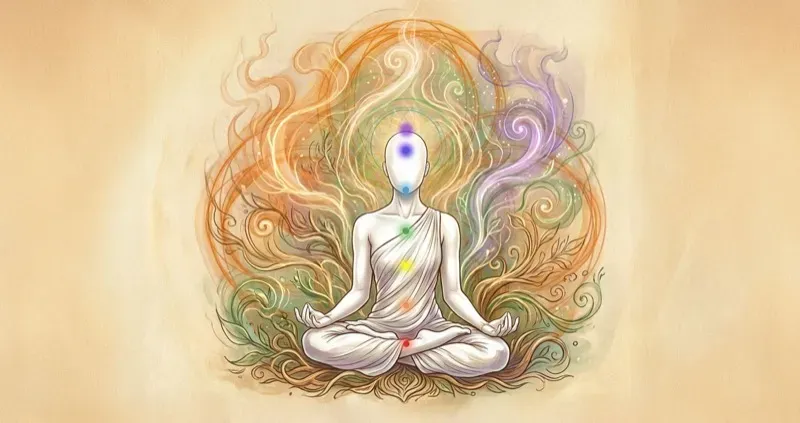
These practitioners were not fitness instructors. They were spiritual seekers who discovered that specific physical practices could profoundly alter states of consciousness, purify the subtle body, and prepare the practitioner for deep meditation. The physical postures that modern yoga emphasises were, in the original context, just one element of a much larger system.
Key Figures in Hatha Yoga History
Several figures shaped Hatha Yoga into the tradition we know today. Matsyendranath is regarded as the semi-mythical founder of the Nath tradition. His student Gorakhnath systematised the teachings and is considered the father of Hatha Yoga as a distinct practice. Later, Svatmarama compiled the most influential Hatha Yoga text — the Hatha Yoga Pradipika — in the 15th century, drawing on the accumulated wisdom of centuries of practice.
In the modern era, teachers like Tirumalai Krishnamacharya adapted Hatha principles for contemporary practitioners, influencing virtually every style of yoga practised today — from Ashtanga to Iyengar to Vinyasa. Understanding this lineage reveals how much has been preserved and how much has been transformed as Hatha Yoga moved from Indian monasteries to global yoga studios.
The Eight Limbs of Yoga
Hatha Yoga is traditionally understood within the framework of Patanjali’s Eight Limbs of Yoga (Ashtanga), though the relationship between Patanjali’s system and the Hatha tradition is more complex than most modern teachers acknowledge. The eight limbs provide a comprehensive map of the yogic path:
- Yama — Ethical restraints: non-violence, truthfulness, non-stealing, moderation, non-possessiveness
- Niyama — Personal observances: cleanliness, contentment, discipline, self-study, surrender
- Asana — Physical postures
- Pranayama — Breath control
- Pratyahara — Withdrawal of the senses
- Dharana — Concentration
- Dhyana — Meditation
- Samadhi — Absorption, unified consciousness
Notice that asana — the physical practice that dominates modern yoga — is just one of eight limbs. In the traditional framework, postures serve a specific purpose: to prepare the body to sit comfortably for extended meditation. The other limbs address ethics, breath, mental discipline, and ultimately the transformation of consciousness itself. When Hatha Yoga is practised with awareness of all eight limbs, it becomes something far richer than physical exercise.
Classical Hatha Yoga Texts
Three classical texts form the foundation of Hatha Yoga knowledge. Each offers a distinct perspective on the practice and its purpose.
Written by Svatmarama in the 15th century, the Hatha Yoga Pradipika is the most widely referenced Hatha Yoga text. It describes asanas, pranayama, mudras, bandhas, and shatkarmas in practical detail, always framing them as preparation for Raja Yoga — the yoga of meditation and consciousness. The text is explicit that the physical practices are not ends in themselves but means to a higher purpose.
Two other essential texts complement the Pradipika: the Shiva Samhita, which places Hatha Yoga within a devotional and philosophical context, and the Gheranda Samhita, which describes a seven-fold path of purification. Together, these texts reveal a tradition that is far more nuanced, more spiritual, and more holistic than the posture-focused practice most modern students encounter.
How Hatha Yoga Changed in the Modern Era
The transformation of Hatha Yoga from a spiritual discipline into a global fitness phenomenon is one of the most significant cultural shifts of the 20th century. This shift was not inherently negative — it brought yoga’s physical benefits to millions of people — but it came at a cost: the progressive stripping away of the philosophical, ethical, and contemplative dimensions that gave the practice its original meaning and power.
Several factors drove this shift. The colonial encounter between India and Britain created pressure to present yoga in terms acceptable to Western sensibilities — emphasising physical health and de-emphasising the spiritual and esoteric dimensions. The global fitness industry then adopted yoga as a product, further reducing it to its most marketable element: the physical practice. Social media accelerated this trend, turning yoga into a visual medium focused on impressive postures rather than inner transformation.
The result is that many modern practitioners have a deep asana practice but little connection to pranayama, meditation, yogic philosophy, or the ethical framework that traditionally supported the physical work. This is not a criticism of modern practitioners — most have simply never been exposed to these dimensions. It is a reflection of how the tradition was transmitted to the West.
The Challenges of Practising Authentic Hatha Yoga Today
Practising Hatha Yoga with genuine depth in the modern world presents real challenges. Commercial yoga studios are built around class schedules and student throughput, leaving little room for the personalised, contemplative approach that traditional Hatha Yoga requires. Teacher training programmes, while increasingly rigorous in anatomy and alignment, often devote limited time to philosophy, history, and the subtler practices of pranayama and meditation.
For practitioners who sense there is more to yoga than perfecting postures, the challenge is finding a teacher and a setting where that depth is available. This is precisely what Tyas offers at Ayutyas — a space where the benefits of private yoga sessions include not just physical attention but access to the philosophical and contemplative dimensions that group classes rarely touch.
Deepening Your Hatha Yoga Practice at Ayutyas
At Ayutyas Holistic Healing Home in Sukawati, Hatha Yoga is taught as a complete practice — not just postures, but breath, awareness, and the philosophical understanding that gives each movement meaning. Tyas’s private sessions create space for the kind of depth that commercial studios cannot offer. Whether you are a beginner discovering yoga for the first time or an experienced practitioner seeking to reconnect with the tradition’s roots, she tailors each session to your level and your questions.
Bali’s spiritual culture provides a natural context for this deeper practice. The island’s Hindu traditions, temple ceremonies, and contemplative atmosphere support the inner work that Hatha Yoga invites. Sukawati, where Ayutyas is located just south of Ubud, offers a quieter setting than the busy wellness districts — a place where practice can unfold without the pressure of trend or performance.
Tyas also integrates Hatha Yoga with sound healing, using singing bowls and tonal frequencies to deepen the meditative states that asana and pranayama prepare. This integration reflects the original spirit of Hatha Yoga — a holistic practice that addresses the whole person.