The Model You Think You Know
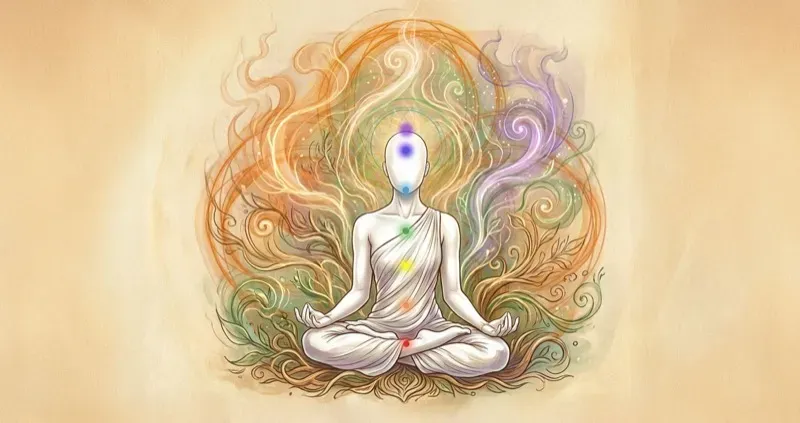
If you have spent any time in a yoga studio, browsed a wellness bookshop, or scrolled through holistic healing content online, you have almost certainly encountered the seven-chakra rainbow model. Seven energy centres arranged along the spine, each assigned a specific colour from the visible spectrum — red at the base, orange at the sacrum, yellow at the solar plexus, green at the heart, blue at the throat, indigo at the third eye, and violet at the crown. Each chakra corresponds to specific emotions, organs, psychological themes, and stages of personal development. The system is clean, symmetrical, and intuitively satisfying.
This model has become so ubiquitous that most people assume it represents an ancient and universal teaching, passed down unchanged through thousands of years of yogic tradition. Chakra charts hang on the walls of yoga studios from Bali to Berlin. Healing sessions are structured around balancing these seven centres. Entire therapeutic modalities have been built upon the assumption that this map is both ancient and authoritative.
But there is a problem. The seven-chakra rainbow system as it is commonly taught today is not ancient. It is not universal. And in several important respects, it does not accurately represent what the original Indian, Tibetan, and tantric traditions actually described. Understanding where this model came from — and what it leaves out — can fundamentally change how you approach energy work, meditation, and your own healing journey.
Where Did the Modern Model Come From?
The version of the chakra system that dominates Western wellness culture can be traced to a single pivotal publication. In 1919, the British orientalist Sir John Woodroffe, writing under the pen name Arthur Avalon, published a translation of a 16th-century Bengali text called the Sat-Cakra-Nirupana, or “Description of the Six Centres.” This text described a specific system of six primary chakras plus the sahasrara (crown) used within one particular lineage of tantric practice. Woodroffe’s translation made this system accessible to English-speaking audiences for the first time.
What happened next was a process of simplification and popularisation that transformed a specific, practice-embedded text into a supposed universal standard. Western writers and teachers took this one system from one text within one tradition and presented it as the definitive map of human energy anatomy. The rainbow colour associations — which do not appear in the original Sanskrit text — were added later, likely influenced by Western colour theory and the visible light spectrum. The psychological correspondences that are now considered inseparable from the chakra system were largely developed by Western interpreters drawing on Jungian psychology, humanistic therapy, and developmental models that had no connection to the original Indian context.
Over the decades, this hybrid model was refined, standardised, and disseminated through yoga teacher training programmes, self-help books, and the growing global wellness industry. Each iteration smoothed away more of the original complexity, producing a version that was easy to teach, easy to learn, and easy to apply — but increasingly distant from the sophisticated contemplative traditions that gave rise to the concept of chakras in the first place.
What the Original Traditions Actually Described
When scholars examine the original Sanskrit and Tibetan texts that discuss chakras, they find something far more complex, diverse, and interesting than the standardised model suggests. The number of chakras described varies enormously across different texts and traditions — systems of five, six, nine, ten, twelve, and even twenty-one centres appear in the historical literature. There was no consensus on a single correct number, because different systems were developed for different practices and different purposes.
The colours associated with each centre also vary significantly. Some texts assign colours that bear no resemblance to the rainbow model. Others assign multiple colours to a single centre, or describe colours that change depending on the practitioner’s level of development and the specific practice being undertaken. The idea that each chakra has one fixed colour is a modern simplification that would have puzzled the original practitioners.
Perhaps most importantly, different lineages described entirely different chakra systems because their practices required different maps. A Shaiva tantra practitioner might work with a system of five centres that served the specific meditative techniques of that tradition. A Buddhist vajrayana practitioner might use a completely different arrangement of energy points and channels that reflected the structure of their own contemplative methods. A hatha yoga text might describe yet another configuration suited to the physical and energetic practices it taught.
These were not competing claims about objective anatomy. They were practice-specific tools, each designed to support a particular path of inner development. The diversity was not a problem to be resolved — it was a feature of a living, adaptive tradition that understood energy work as something far more fluid and context-dependent than a fixed map could capture.
Prescriptive vs. Descriptive
This distinction is perhaps the most important insight for anyone working with chakras today. The original chakra systems were prescriptive — they were instructions for practice, not descriptions of pre-existing anatomy. A text that described seven centres was not claiming that every human body contains exactly seven energy centres at fixed locations. It was saying: for this practice, visualise these centres in these locations with these qualities, and here is what will happen.
The modern interpretation treats chakras as descriptive — as an anatomical map of the subtle body that exists whether or not you are engaged in any particular practice. This shift from prescriptive to descriptive changes everything about how the system is understood and applied. When chakras are treated as fixed anatomy, they become something that can be measured, diagnosed, and corrected — your heart chakra is blocked, your root chakra is deficient, your third eye is overactive. The language of pathology enters the picture, and the practitioner becomes a kind of energetic mechanic fixing a malfunctioning machine.
When chakras are understood as prescriptive tools, the relationship changes entirely. You are no longer diagnosing a broken system. You are choosing a contemplative technology that serves your current practice and intention. The question shifts from “what is wrong with my chakras?” to “which framework will best support the inner work I am doing right now?” This is a far more empowering and honest approach, and it is much closer to how the original practitioners actually worked with these systems.
What the Original Practices Looked Like
The chakra practices of the original traditions were sophisticated contemplative technologies that bore little resemblance to the simplified visualisations commonly taught today. They involved multiple layers of practice working together — mantra, visualisation, breath, and ritual — all integrated within a comprehensive system of spiritual development guided by an experienced teacher.
Bija mantras — sacred seed syllables such as LAM, VAM, RAM, YAM, HAM, and OM — were not simply chanted as affirmations. They were precise vibrational tools used to activate specific energetic qualities within the body. Each syllable was understood to carry a particular frequency that resonated with specific aspects of consciousness, and their correct pronunciation and placement required careful instruction and sustained practice.
Nyasa, the ritual placement of mantras and divine energies onto specific points of the body, was a central practice in many tantric traditions. The practitioner would systematically consecrate their own body through touch, breath, and intention, transforming ordinary physicality into a sacred vessel. This was not abstract energy work — it was an embodied, tactile practice that engaged the full spectrum of human experience.
Kundalini meditation involved carefully guided visualisation and breath practices designed to awaken and direct the fundamental life force through the central energy channel. These practices were never casual or self-directed — they required extensive preparation, ethical purification, and the guidance of a qualified teacher who could monitor the practitioner’s progress and address any difficulties that arose.
What unites all of these practices is their depth, their specificity, and their integration within a larger framework of spiritual development. They were not techniques to be extracted from their context and applied in isolation. They were elements of comprehensive systems designed to transform consciousness at its most fundamental level.
Does This Mean the Modern Model Is Wrong?
Not necessarily. The question is more nuanced than right or wrong. The modern seven-chakra model has genuine therapeutic value. Many people find it a useful framework for understanding their emotional patterns, identifying areas of physical tension, and structuring their meditation and self-care practices. As a tool for self-reflection, it can be remarkably effective. Therapists, bodyworkers, and energy healers around the world use it daily with meaningful results for their clients.
The problem is not the model itself but how it is presented. When a simplified, recently constructed framework is taught as though it were an ancient, universal, and scientifically validated map of human energy anatomy, something important is lost. Students and clients are deprived of the richness and diversity of the original traditions. They may develop a false sense of certainty about systems that were always meant to be exploratory and adaptive. And they may miss the opportunity to discover frameworks that would actually serve their individual needs and practice more effectively than the one-size-fits-all model they have been given.
Presenting simplified frameworks as ancient universal truth is misleading, even when the intention is good. It reduces a vast and sophisticated tradition to a poster on a yoga studio wall. It closes doors that should remain open. And it substitutes intellectual certainty for the kind of living, questioning engagement that the original practitioners valued above all else.
How Ayutyas Approaches Energy Work
At Ayutyas Holistic Healing Home, the approach to energy work is grounded in intellectual honesty and deep respect for multiple traditions. Rather than adhering dogmatically to any single model, Tyas draws upon Indian tantric traditions, Tibetan Buddhist practices, Javanese spiritual wisdom, and contemporary research into the nervous system, brainwave patterns, and the physiology of stress and healing.
This does not mean abandoning the chakra concept altogether. It means holding these frameworks with appropriate humility — using them as lenses through which to explore your experience rather than as fixed truths to be imposed upon it. In a session at Ayutyas, you might work with elements of the seven-centre model because they serve the moment, but you might also engage with practices drawn from entirely different traditions because those serve the moment better.
The goal is never to prove that one system is correct and others are wrong. The goal is to help each individual find the practices and frameworks that resonate most deeply with their own experience and support their own healing and growth. This requires a practitioner who is willing to draw from a broad range of knowledge, who remains genuinely curious rather than dogmatically certain, and who prioritises the client’s actual experience over theoretical consistency.
What makes this approach different is its transparency. Tyas does not claim to be teaching ancient secrets or channelling universal truths. She offers a thoughtfully curated integration of multiple traditions, clearly rooted in study and personal practice, and always held with the kind of open-handed honesty that invites inquiry rather than demanding belief.
“When we approach these systems with curiosity rather than certainty, we actually get closer to what the original practitioners intended — a living, exploratory relationship with our own energy.” — Tyas